Gold temple jewellery carries the gods into gold: Lakshmi, the peacock, the lotus and the temple tower, raised from the metal in relief and finished bright or antique. We make it necklace by necklace in our workshop.
New designs are being photographed.
Every piece here is made to order. Message us and we will send the current designs.
Ask for designsMeaning
What is temple jewellery?
Temple jewellery is gold jewellery that shows the gods — Lakshmi, peacocks, lotuses — worked in relief. It began as ornaments for the deities of South India's temples, passed to the dancers of Bharatanatyam, and from the stage to the bride.
Its best-known home is Nagercoil, in Tamil Nadu: its temple jewellery goes back to the Chola kings and holds a Geographical Indication. See our Lakshmi Temple Haar.
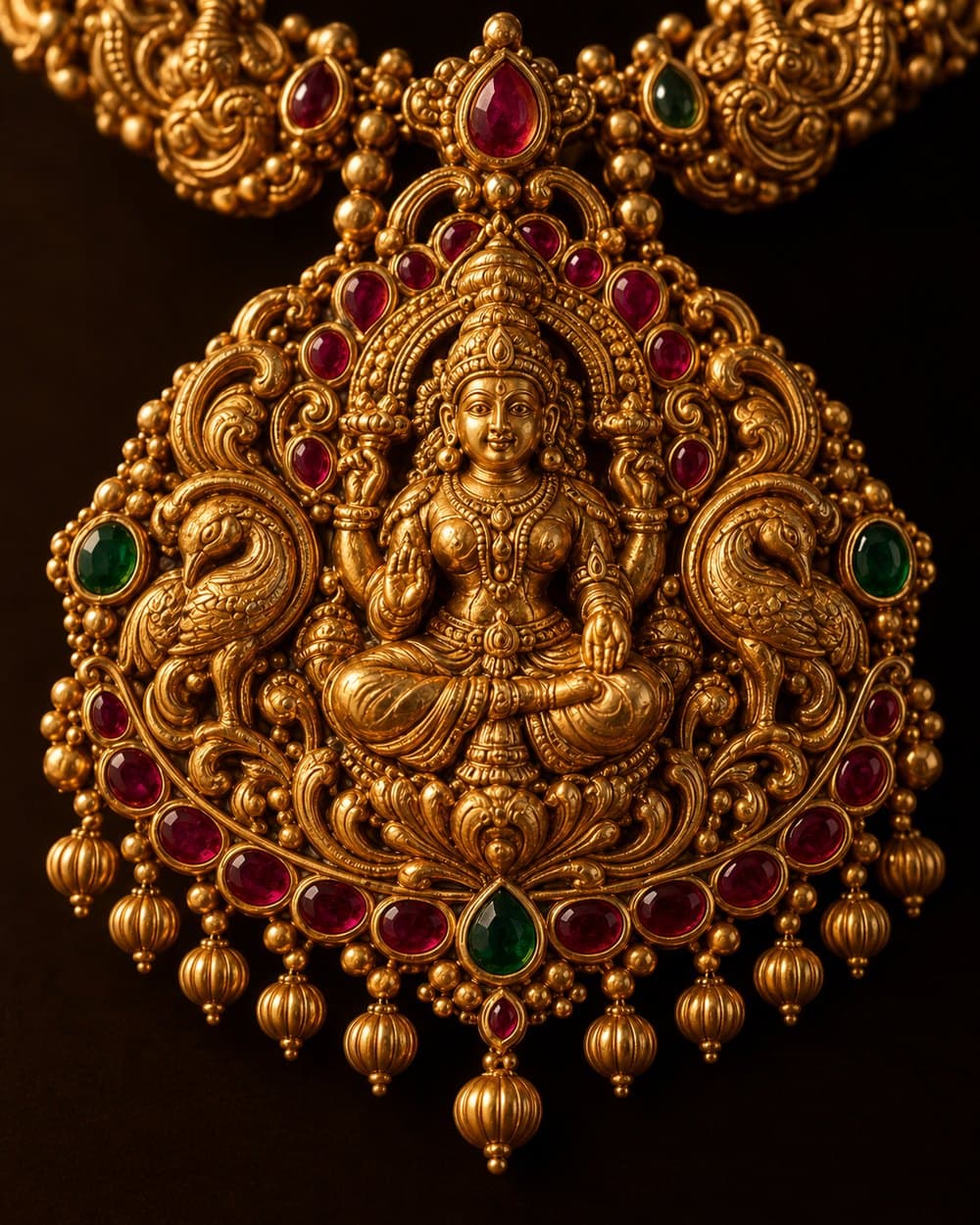
How to tell temple jewellery
The motifs
Gods and their world — Lakshmi, peacocks, lotus, the gopuram. The motifs make it temple jewellery, not the metal.
Relief work
Figures raised from the gold, so they catch the light from every side.
Kuchu kal
Small red and green stones, set as accents — the gold stays the subject.
Antique or bright
A darkened finish that lifts the relief, or polished to full yellow.
Motifs
Temple jewellery motifs and their meaning
- Lakshmiलक्ष्मी
- The goddess of wealth, seated on a lotus; the commonest centre of a temple necklace.
- Peacock
- Murugan's mount and a sign of grace, usually set in pairs facing one another.
- Lotusकमल
- Purity and fortune — Lakshmi's seat, and a border in its own right.
- Swan
- Wisdom and discernment; the annam is a favourite in hair ornaments and earrings.
- Gopuram
- The temple's gateway tower, used as a pendant or as a repeating border.
- Mango
- Fertility and plenty — the shape behind the mango mala.
What is the difference between antique and bright temple jewellery?
Bright temple jewellery is polished to the full yellow of gold. Antique is given a matt, darkened finish so the relief of the figures stands out — the look most often worn with a silk sari, and the one that hides small scratches best.
What are kuchu kal stones?
The small red and green stones of Nagercoil temple jewellery. They are set in small numbers, as accents, so the gold figures stay the subject; some pieces use rubies and emeralds in their place.
Why do Bharatanatyam dancers wear temple jewellery?
Because the dance tells the stories of the gods, and its costume borrows their jewels: the long necklace, the waist belt, the sun and moon in the hair and the goddess's head ornaments.
How should temple jewellery be cleaned?
Gently — a soft dry cloth, then cotton to wrap it in. Scrubbing wears down the faces and edges of the figures, which is where all the detail is, and strips an antique finish.