Jewellery names
Rajasthani Jewellery Names with Pictures: 20 Pieces, Head to Toe
Borla, aad, timaniya, bajuband, ponchi, hathphool — the twenty pieces of traditional Rajasthani and Rajputi jewellery, named, pictured and placed from head to toe.
By Ponchi by MK Jewellers, Jaipur9 min read
Key takeaways
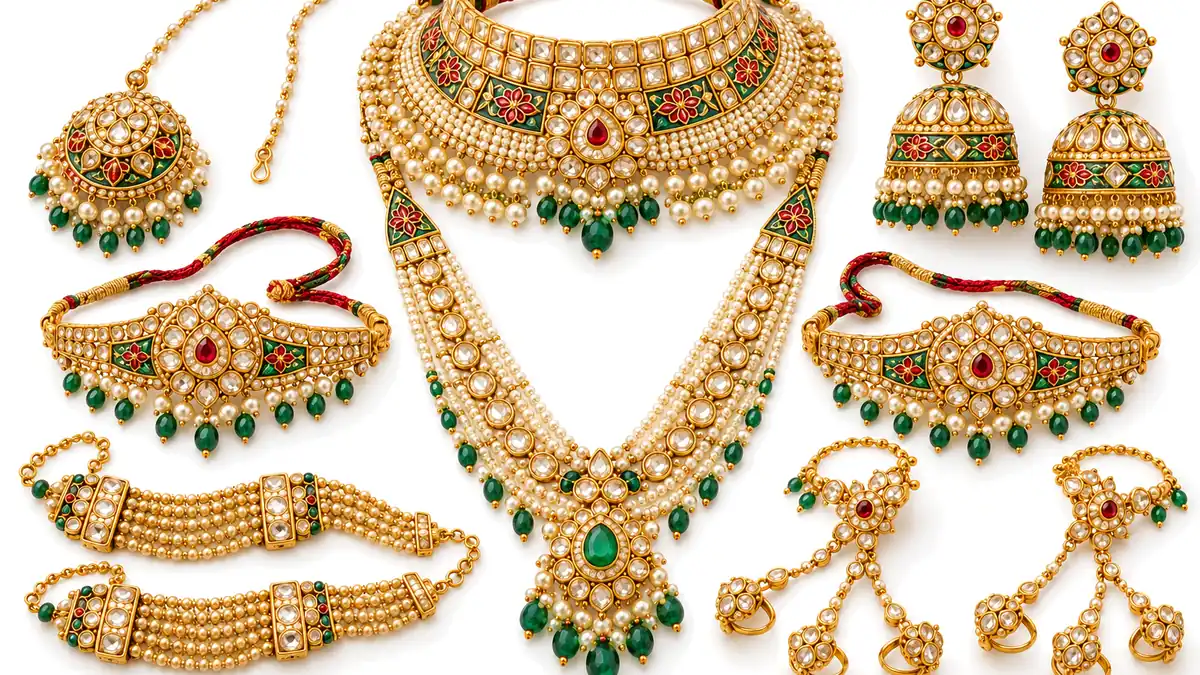
- Rajasthani jewellery is worn head to toe as one set — 20 traditional pieces, from the borla at the forehead to bichhiya on the toes.
- The borla (rakhdi) and the aad are what mark a set as Rajasthani; Rajput families add the timaniya, bajuband and ponchi.
- By tradition gold is worn from the waist up and silver below it, which is why payal, kadla and bichhiya are silver.
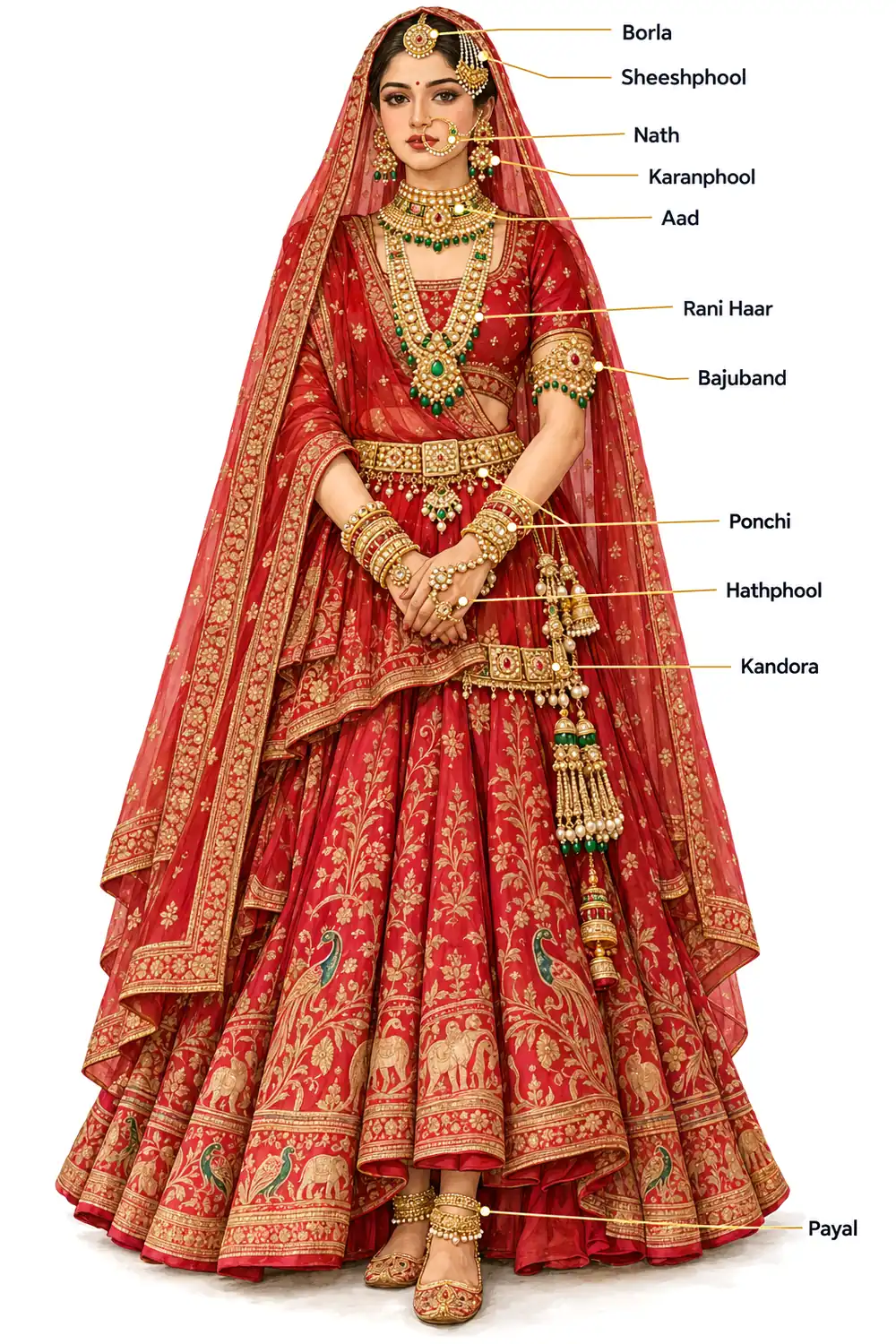
Rajasthani jewellery is the traditional gold jewellery of Rajasthan’s Rajput and Marwari families, worn head to toe as one set: borla, sheeshphool, mathapatti, nath and karanphool on the head; aad, timaniya, hasli and rani haar at the neck; bajuband, ponchi, pacheli and hathphool on the arms; kandora at the waist; payal and bichhiya at the feet. It is usually made in kundan, polki and meenakari.
What is Rajasthani jewellery?
Rajasthani jewellery is less a style than a vocabulary. Every piece has a name, a place on the body and, often, a meaning — which piece a married woman wears, which one a bride wears for the pheras, which one ran the household. It is worn head to toe as one set, and the set is built around two pieces you can recognise from across a room: the borla at the forehead and the aad at the neck.
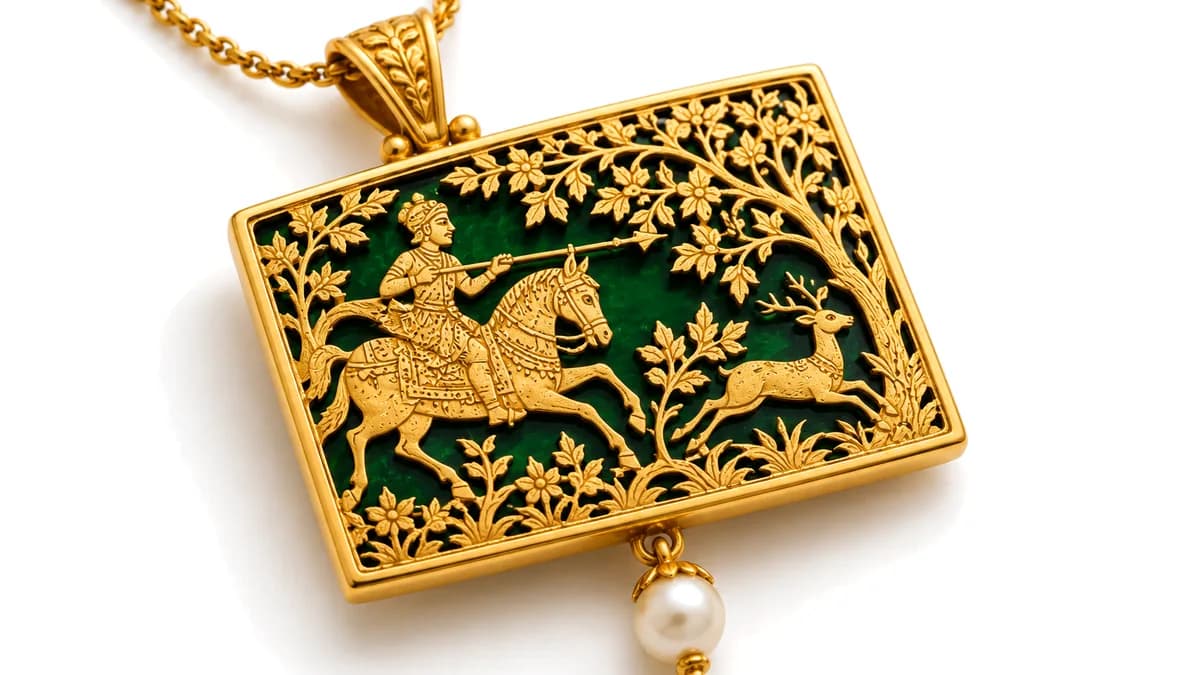
Most of it is made in Jaipur’s three great techniques — kundan, polki and meenakari — with thewa from Pratapgarh as a rarer fourth. By tradition, gold is worn from the waist up and silver below it: gold is treated as sacred, so it does not go on the feet.
What is the famous jewellery of Rajasthan?
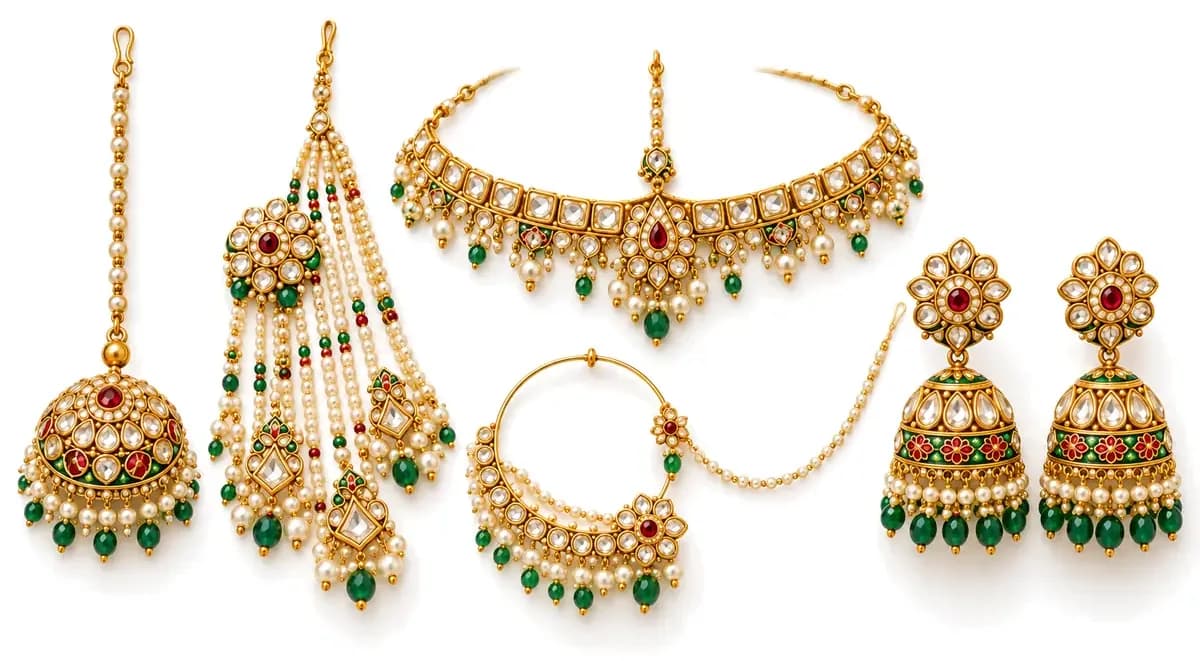
The borla (also called rakhdi). Where the rest of India wears a flat maang tikka, Rajasthan wears a bell — a small domed sphere on a chain at the hair parting. Spot a borla in a photograph and you have located the state. The aad, the broad plate choker, is a close second.
Head and face jewellery (5 pieces)
1. Borla / Rakhdi (बोरला)
The domed, bell-like ornament that hangs at the centre of the forehead from the hair parting. Rakhdi is the Rajput name for it, borla the Marwari one. For many families it is the mark of a married woman. See our gold maang tikka.
2. Sheeshphool (शीशफूल)
Sheesh is head, phool is flower: flower-shaped plates that pin the odhni to the hair, with chains fanning out from the centre. Usually enamelled on the reverse too, because it is seen from behind as often as from the front.
3. Mathapatti (माथापट्टी)
A chain of linked gold plates that runs along the hairline from the parting, meeting the borla or tikka at the centre. On a bride it frames the whole face. See our matha patti designs.
4. Nath (नथ)
The bridal nose ring, large enough that a chain carries its weight up to the hair. Its size and shape are regional and family-specific — one of the few pieces still dictated by lineage rather than taste.
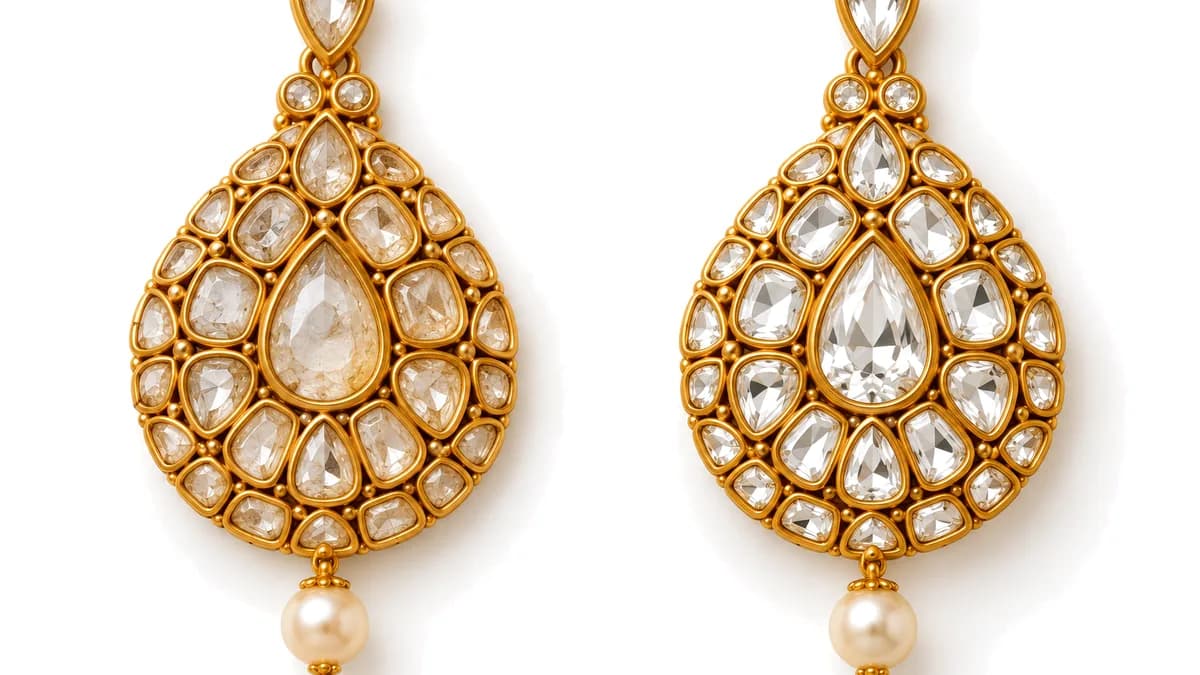
5. Karanphool & Jhumka (कर्णफूल)
Karan is ear: a flower-shaped disc at the lobe with a bell (jhumka) hanging from it, and a sahara chain over the ear taking the load. Kundan on the face, meena on the back of the dome. See our long gold earrings.
Rajasthani necklaces (5 pieces)
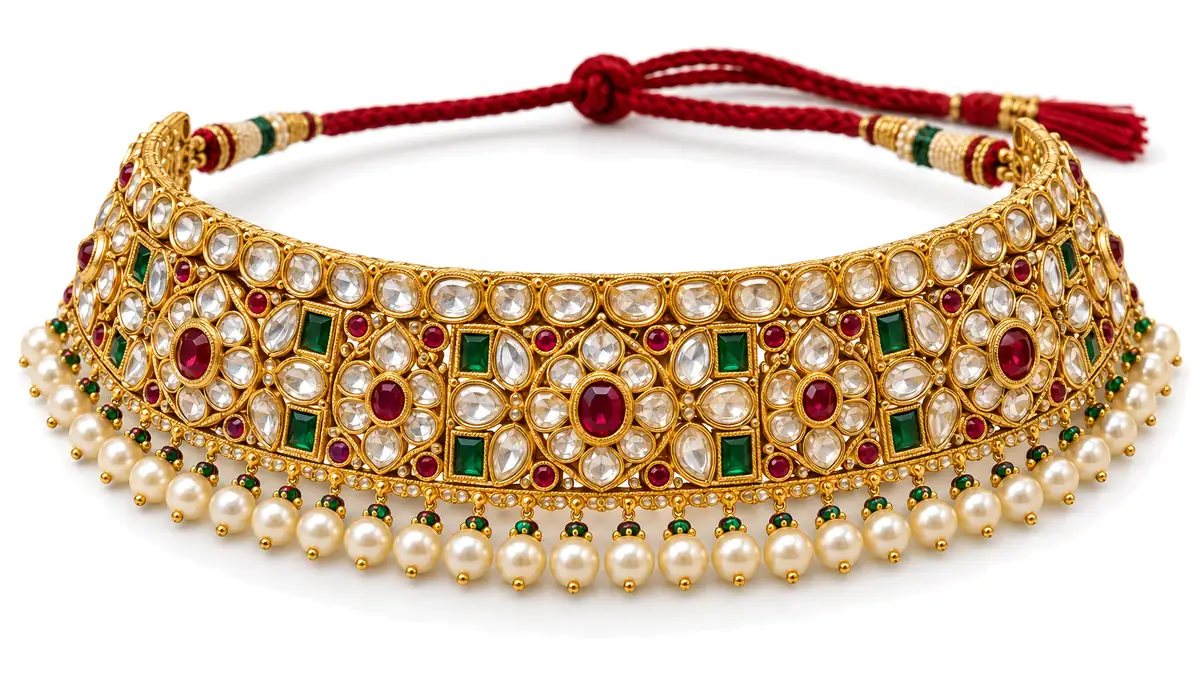
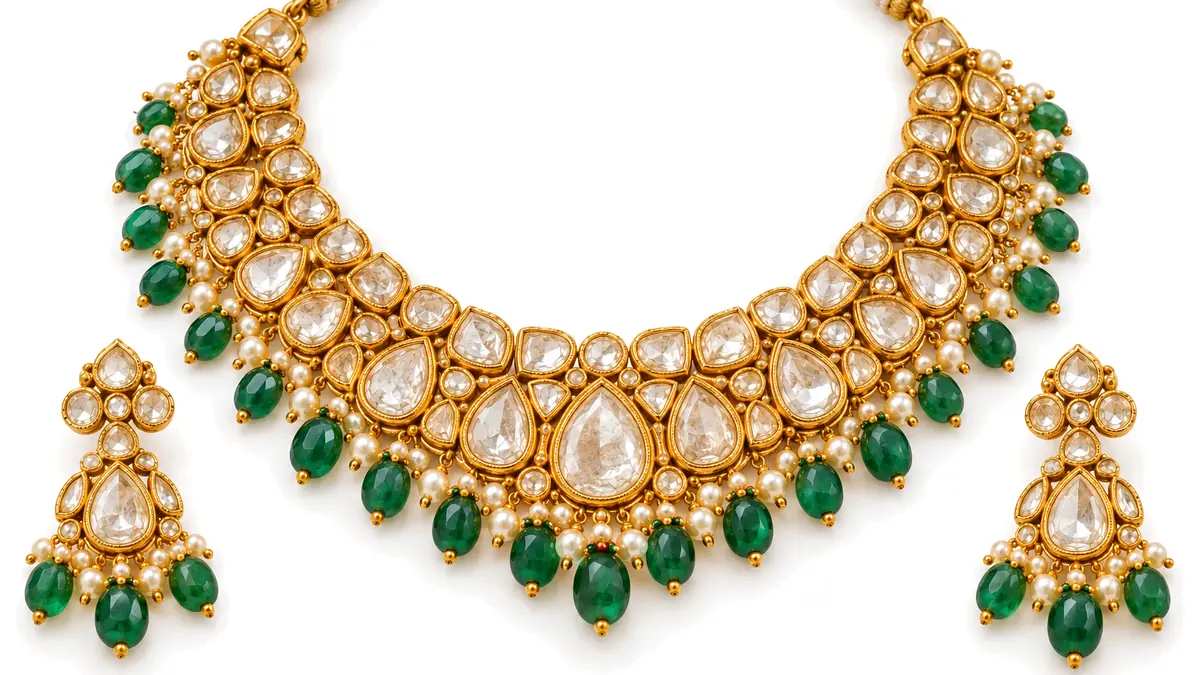
6. Aad (आड़)
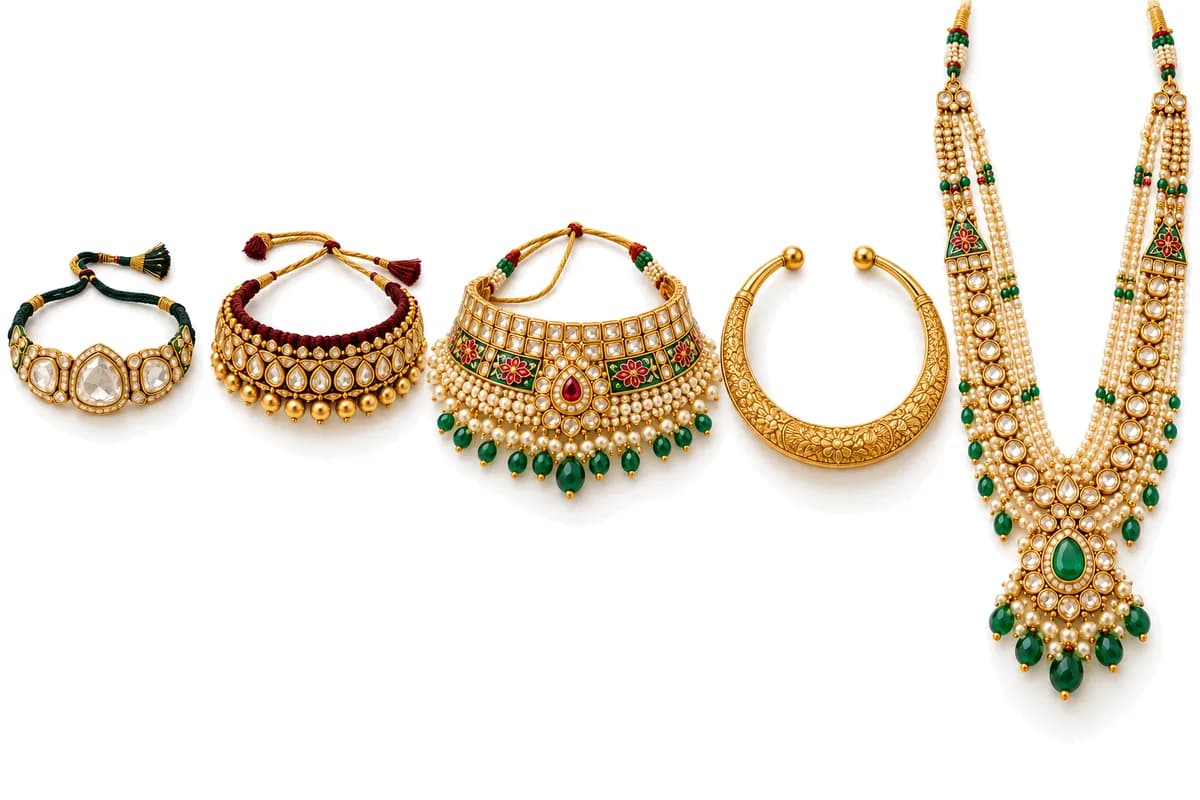
The broad rectangular plate choker that covers the whole neck, usually kundan or polki with pearl strings below. The heaviest single piece in the set, and the one that reads as Rajput at fifty paces. See our gold choker necklaces.
7. Timaniya (तिमणिया)
Literally tin-maniya, three beads: a tight choker built around three central elements, usually uncut diamond, on a cord. Five elements instead of three and the name changes to panchmaniya. See our gold chokers.
8. Gulband (गलबंद)
A choker of small gold elements stitched or strung onto a band of cloth or thread and tied at the back of the neck — lighter than an aad, and often worn every day.
9. Hasli (हँसली)
A rigid, open-ended collar named after the hansli, the collarbone it rests on. One solid curve of gold, worn alone or under softer necklaces. See our gold hasli necklaces.
10. Rani Haar (रानीहार)
The queen’s necklace: long layered strings falling below the aad, often finished with an emerald or polki pendant. Worn over the aad, never instead of it. See our gold rani haar.
Arm and hand jewellery (6 pieces)
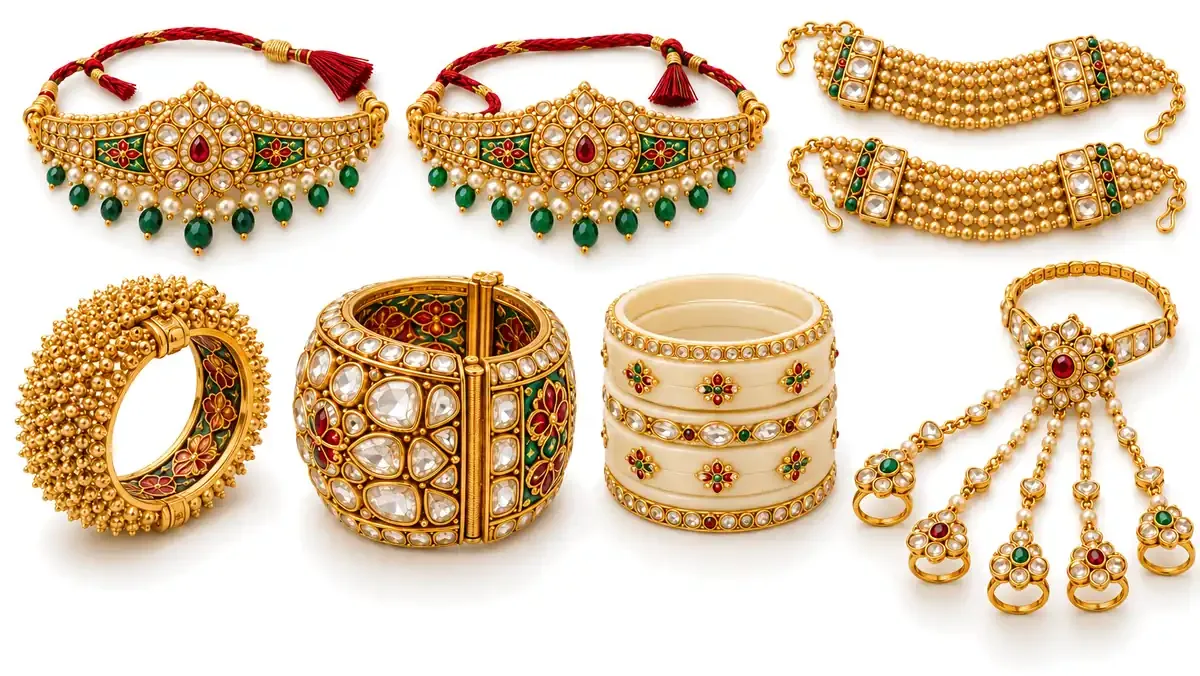
11. Bajuband (बाजूबंद)
The armlet, worn on the upper arm and tied with a silk cord that can be tightened. Traditionally worn in a pair, and traditionally the most heavily enamelled piece in the set, because the arm turns and shows its back. See our gold bangles.
12. Ponchi (पौंची)
The Rajputi wrist ornament this shop is named after: strands or plate-linked bands of gold beads, closing on a clasp, often set with navratna or polki and sized to the wearer rather than sold in a bangle gauge. The beads are hollow and filled with lac — ask how that is priced. See our gold ponchi.
13. Gokhru (गोखरू)
A bangle or kada covered in small pointed beads, named after the spiky gokhru seed it resembles. Bold, textured and very Marwari.
14. Pacheli (पछेली)
Broad and rigid like a kada, but it opens on a clasp — which is why it gets called both a ponchi and a kada, and is neither. Worn with the chooda.
15. Chooda (चूड़ा)
The bride’s set of bangles, worn up the arm — traditionally ivory, today usually lac or acrylic — with gold bangles and the ponchi set beside it. The ponchi goes on before the chooda, which is why it is so often the urgent order in a wedding week.
16. Hathphool (हथफूल)
Hand-flower: a central plate on the back of the hand, chained to a wrist band and to rings on the fingers. Worn on the bride’s working hand for the pheras. See our gold rings for women.
Waist and feet jewellery (4 pieces)
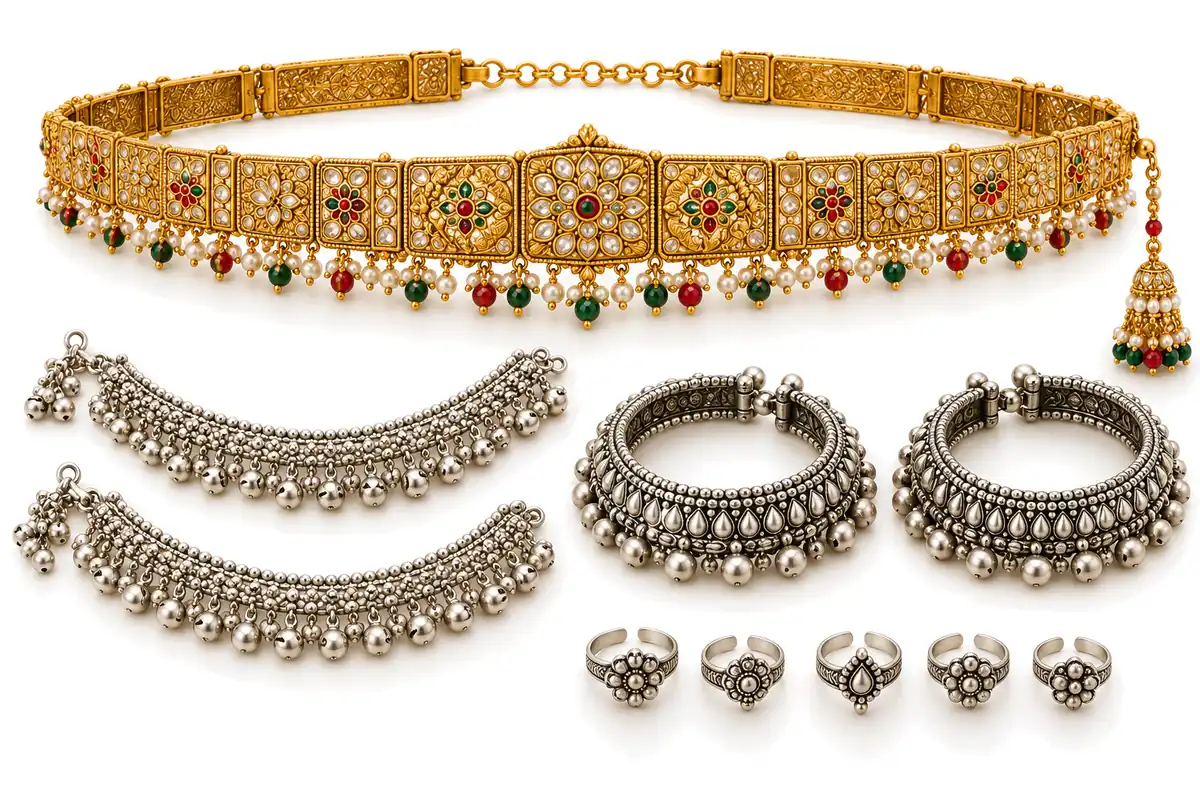
17. Kandora / Tagdi (कंदोरा)
The waist belt, in gold links or braided gold thread. Historically it also held the keys of the household — the ornament that said who ran the house.
18. Payal / Pajeb (पायल)
Chain anklets hung with small bells, traditionally in silver. They announce the wearer before she enters the room — which was rather the point.
19. Kadla (कड़ला)
Heavy, rigid anklets, sometimes worn stacked with the payal. Traditionally silver and often very old: kadla are the pieces most often handed down unchanged.
20. Bichhiya (बिछिया)
Toe rings, worn on the second toe of both feet by married women. Silver, by the same rule that keeps gold above the waist.
Rajasthani jewellery names in English: quick reference
| Name | Hindi | Worn on | In English |
|---|---|---|---|
| Borla / Rakhdi | बोरला | Forehead | Domed forehead ornament |
| Sheeshphool | शीशफूल | Head | Head flower |
| Mathapatti | माथापट्टी | Hairline | Forehead chain |
| Nath | नथ | Nose | Bridal nose ring |
| Karanphool & Jhumka | कर्णफूल | Ears | Flower-and-bell earrings |
| Aad | आड़ | Neck | Plate choker |
| Timaniya | तिमणिया | Neck | Three-stone choker |
| Gulband | गलबंद | Neck | Band choker |
| Hasli | हँसली | Collarbone | Rigid collar |
| Rani Haar | रानीहार | Chest | Queen’s long necklace |
| Bajuband | बाजूबंद | Upper arm | Armlet |
| Ponchi | पौंची | Wrist | Beaded wrist ornament |
| Gokhru | गोखरू | Wrist | Spiked bangle |
| Pacheli | पछेली | Wrist | Hinged broad bangle |
| Chooda | चूड़ा | Forearm | Bridal bangle set |
| Hathphool | हथफूल | Hand | Hand harness |
| Kandora / Tagdi | कंदोरा | Waist | Waist belt |
| Payal / Pajeb | पायल | Ankle | Belled anklet |
| Kadla | कड़ला | Ankle | Rigid anklet |
| Bichhiya | बिछिया | Toes | Toe rings |
Rajputi jewellery: what makes a Rajput set different
“Rajputi jewellery” is the Rajput family’s version of the Rajasthani set, and it is defined by a handful of pieces: the rakhdi at the forehead, the aad and timaniya at the neck, the bajuband and the ponchi at the arms. In many Rajput families the rakhdi and the aad, rather than a mangalsutra, are what mark a married woman.
Rajputi sets lean towards polki and kundan on the front, deep green and red meenakari on the back, and pearls strung below the plates. They are made to be seen in procession and at a distance — big, flat, legible shapes — rather than examined up close.
The crafts behind Rajasthani jewellery
| Craft | What it is | Read more |
|---|---|---|
| Kundan | Stones held by a collar of 24K gold foil | Kundan jewellery |
| Polki | Uncut natural diamonds, set flat | Polki jewellery |
| Jadau | The whole embedded-stone tradition | Polki vs kundan |
| Meenakari | Enamel fired onto gold, colour by colour | The firing order |
| Thewa | Gold sheet fused onto coloured glass | Thewa jewellery |
Building a Rajasthani bridal set: what to buy first
- The aad — the anchor of the set and the most gold. Everything else is chosen to match it.
- Borla or rakhdi and the earrings — the face pieces, made to the same stones and enamel as the aad.
- The ponchi — it goes on before the chooda, so it cannot wait until the last week.
- Bajuband and rani haar — the pieces that complete the procession look.
- Hathphool, mathapatti and kandora — often borrowed or inherited, and worth asking the family about first.
A full jadau bridal set passes through about five workshops and takes around six weeks, so start early. See our bridal gold necklace sets, our gold diamond polki jewellery, or commission a piece.
Questions people ask
What is the famous jewellery of Rajasthan?
The borla, or rakhdi — a domed, bell-like ornament worn at the forehead — is the signature of Rajasthan. The aad, a broad plate choker, is a close second.
What is Rajasthani forehead jewellery called?
It is called a borla, or rakhdi in Rajput families. Unlike a flat maang tikka, it is a small domed sphere hanging from a chain at the hair parting.
What is an aad necklace?
An aad is a broad rectangular plate choker that covers the whole neck, usually in kundan or polki with strings of pearls below. It is the heaviest single piece in a Rajputi bridal set.
What is the difference between a borla and a maang tikka?
A maang tikka is a flat pendant on the forehead. A borla is a three-dimensional dome or bell shape. The borla is particular to Rajasthan.
What jewellery does a Rajput bride wear?
A Rajput bride typically wears a rakhdi, sheeshphool, nath, karanphool jhumkas, an aad with a rani haar, timaniya, bajuband, ponchi with her chooda, hathphool and a kandora at the waist.
Why is Rajasthani jewellery not worn in gold on the feet?
By tradition gold is treated as sacred, so it is worn from the waist up, and anklets and toe rings are made in silver.